Digital & Innovation
AI supports clinical experts in prostate cancer diagnosis


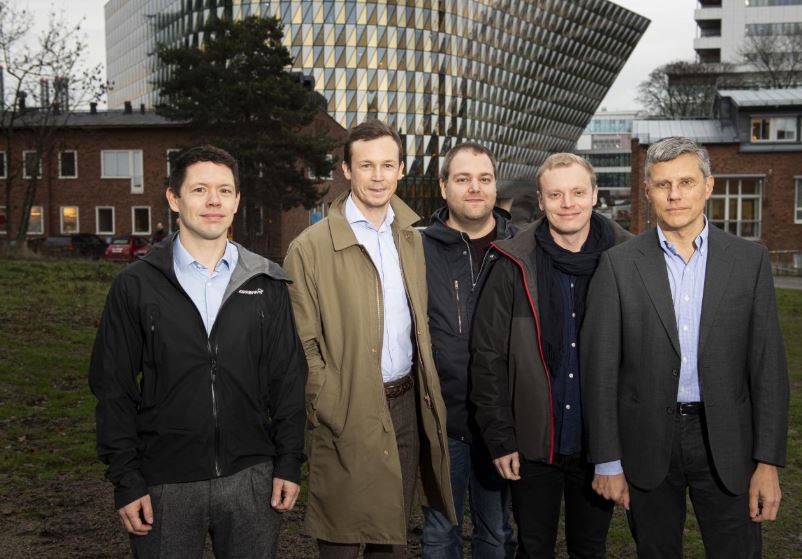
Researchers have developed a method based on artificial intelligence (AI) for histopathological diagnosis and grading of prostate cancer.
The AI-system has the potential to solve one of the bottlenecks in today’s prostate cancer histopathology by providing more accurate diagnosis and better treatment decisions. The recently published study in The Lancet Oncology shows that the AI-system is as good at identifying and grading prostate cancer as world-leading uro-pathologists.
“Our results show that it is possible to train an AI-system to detect and grade prostate cancer on the same level as leading experts,” says Martin Eklund, associate professor at the Department of Medical Epidemiology and Biostatistics at Karolinska Institutet who led the study. “This has the potential to significantly reduce the workload of uro-pathologists and allow them to focus on the most difficult cases.”
A problem in today’s prostate pathology is that there is a certain degree of subjectivity in the assessments of the biopsies. Different pathologists can reach different conclusions even though they are studying the same samples. This leads to a clinical problem where the doctors must pick treatment based on ambiguous information. In this context, the researchers see significant potential to use the AI-technology to increase the reproducibility of the pathological assessments.
Differentiate your business, build thought leadership and boost lead generation by reaching the Australian Pharma, MedTech and Biotech industry professionals. Health Industry Hub offers unique media solutions to vendors and suppliers servicing the industry. Contact us.
Near-perfect detection
The findings showed that the AI-system was almost near-perfect in determining whether a sample contained cancer or not, as well as in estimating the length of the cancer tumor in the biopsy. When it comes to determining the severity of the prostate cancer, the so-called Gleason score, the AI system was on par with the international experts.
“When it comes to grading the severity of the prostate cancer, the AI is in the same range as international experts, which is very impressive, and when it comes to diagnostics, to determine whether or not it is cancer, the AI is simply outstanding,” says Lars Egevad, professor in pathology at Karolinska Institutet and co-author of the study.
Validation study underway
A multi-centre study spanning nine European countries is currently underway with completion slated by the end of 2020. That study aims to train the AI-system to recognise cancer in biopsies taken from different laboratories, with different types of digital scanners and with very rare growth patterns. In addition, a randomised study starting in 2020 will examine how the AI-model may be implemented in Sweden’s health care system.
“AI-based evaluation of prostate cancer biopsies could revolutionise future health care,” says Henrik Grönberg, professor in cancer epidemiology at Karolinska Institutet and head of the Prostate Cancer Centre at S:t Göran Hospital in Stockholm. “It has the potential to improve the diagnostic quality, and thereby secure a more equitable care at a lower cost.”
“The idea is not that AI should replace the human involvement, but rather act as a safety net to ensure that pathologists don’t miss some cancers, and assist in standardisation of grading,” says Martin Eklund. “It could also serve as an alternative in parts of the world where there is a complete lack of pathological expertise today.”
Register FREE to receive the latest news, innovations and insights from Health Industry Hub; the only one-stop-hub connecting Australia’s Pharma, MedTech and Biotech industry professionals and its key stakeholders.
You may also like RACGP calls on the Federal Government to help GPs battling the bushfire crisis
ESG

Government joins forces with US and UK to decarbonise supply chains in pharmaceuticals and medical technologies
ESG: The Albanese Government signed a public statement of collaboration with the United States and United Kingdom to decarbonise healthcare […]
MoreNews & Trends - MedTech & Diagnostics
Bariatric surgery trumps Novo Nordisk’s Wegovy in cost-effectiveness and durability
MedTech & Diagnostics News: Bariatric surgery emerges as cost-effective, boasting superior and enduring weight loss outcomes over a five-year span […]
MoreNews & Trends - Pharmaceuticals

Aussie digital health company hits new milestone in AstraZeneca partnership
Pharma News: Fewer than 50% of asthma patients adhere to their prescribed preventative medications. An Australian digital health company has […]
MoreDigital & Innovation

Medical drone to reduce health equity gaps in rural and remote Australia
A specialised medical drone which increases accessibility to essential health services such as pathology, medicines, and telehealth services in rural […]
More