News & Trends - MedTech & Diagnostics
World-first breakthrough by Australian researchers in ventilator splitting to cope with COVID-19


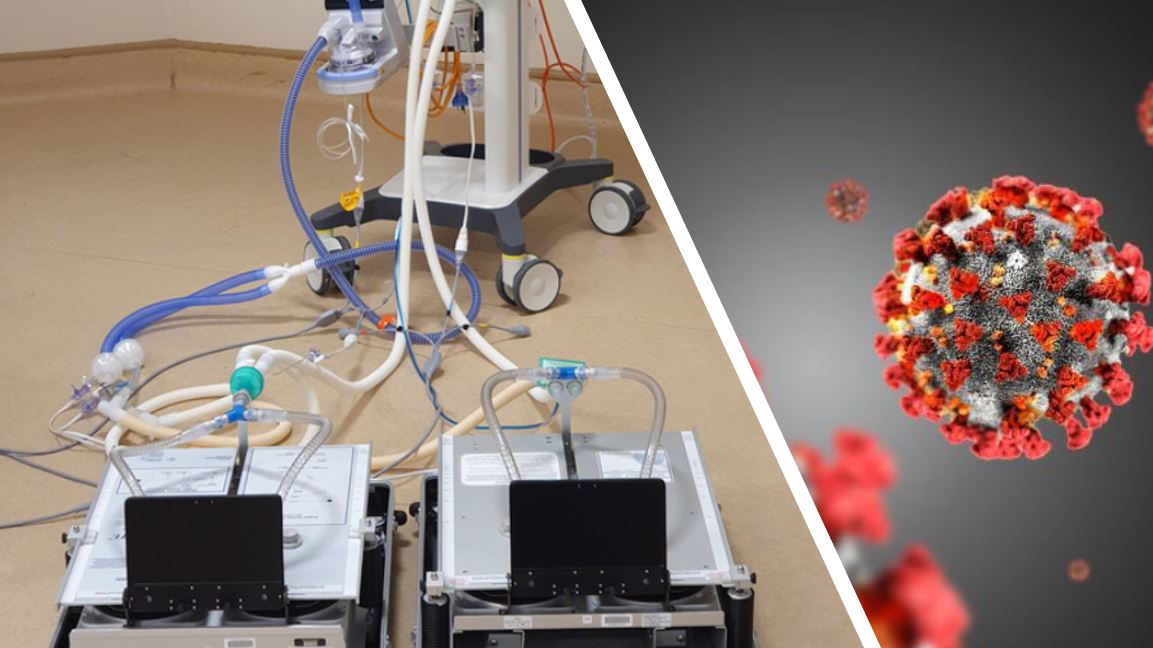
MedTech News: A world-first breakthrough by Australian researchers in ventilator splitting could help hospitals under severe stress as the number of critical COVID-19 cases continues to rise.
For the first time, researchers have successfully tested, in a simulated environment, the potential to ventilate two lungs of different compliances from a single ventilator.
The COVID-19 pandemic has led to a worldwide shortage of ventilators. Some of the worst affected parts of the globe are already experiencing serious shortages of ventilators, which are needed desperately to treat the failing lungs of seriously ill COVID-19 patients.
The study, published in the international journal Anaesthesia, is led by Dr Alexander Clarke from the Department of Anaesthesia at The Royal Women’s Hospital in Melbourne, and Dr Shaun Gregory from the Department of Mechanical and Aerospace Engineering at Monash University.
“Patients with COVID-19 may develop progressive viral pneumonitis leading to severe respiratory failure. The combination of unprecedented disease burden and global supply chain disruption has resulted in worldwide shortages of medical equipment,” Dr Clarke said.
 Customer engagement during COVID-19. Fill the gap of reduced field force activities. Health Industry Hub combines expertise in delivering digital health content and measuring engagement with 20+ years industry experience. Created by industry for industry. Contact us.
“Despite our advances in the practical application of ventilator splitting, the practice is unregulated and under tested. But as the COVID-19 pandemic continues to grow, some countries, like the USA, may consider ventilator splitting on compassionate grounds. The United States of America Food and Drug Administration has passed emergency use authorisation for the splitting of ventilators.
The basic principle of ventilator splitting is simple – two or more patients are connected to one ventilator and both are exposed to the same circuit dynamics.
While the research findings are exciting for crisis and trauma medicine, Dr Gregory says they need to be interpreted and applied with caution.
“Our experiment has demonstrated that in order to deliver a safe tidal volume and airway pressure, a resistance mechanism is required on at least one inspiratory limb of the circuit. One way of achieving this is through the use of a tracheal tube and Hoffman clamp – common, practical items found in hospitals,” Dr Gregory said.
“While the discovery is promising, the use of this method in the clinical context has not been validated and we don’t recommend its wider use without further trials. We are hopeful of one day being able to get great surety with this approach to ventilator splitting so we can help save lives in dire cases of emergency.”
 Register FREE and join 20,000+ industry professionals receiving the latest industry news and engaging content from Health Industry Hub; the ONLY one-stop-hub connecting Australia’s Pharma, MedTech and Biotech industry professionals.
News & Trends - Biotechnology

Aussie biotech secures agreement with UQ and USyd to advance cardiovascular diseases research
Biotech News: Australian biotechnology company, Cartherics, developing immune cell therapies for the treatment of cancer, has entered into a Technology […]
MoreNews & Trends - MedTech & Diagnostics

NSW Health Secretary urges more focus on patient experience, drawing from her own heart valve disease journey
In a heart-warming event that united patients, their loved ones, representatives from patient organisations and employees, Edwards Lifesciences hosted its […]
MoreHuman Resources

‘To be an inclusive society, we need an embedded national strategy to combat systemic racism’, says Commissioner Sivaraman
Race Discrimination Commissioner Giridharan Sivaraman has welcomed the release of the Multicultural Framework Review by the Federal Government, calling it […]
MoreNews & Trends - Pharmaceuticals

Shingles vaccine lowers risk of dementia
Pharma News: A recombinant shingles vaccine which was added to Australia’s National Immunisation Program (NIP) in November last year, is […]
More