News & Trends - MedTech & Diagnostics
A potential new ‘silver bullet’ to treat inoperable brain cancers


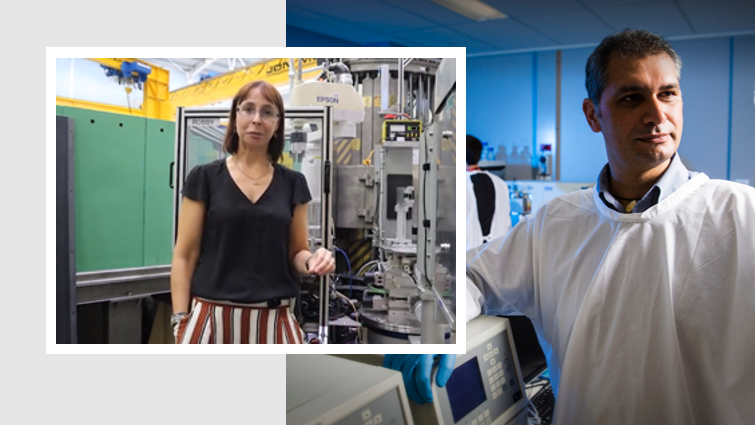
MedTech News: Australian scientists have made progress on a potential new approach that could be used to treat some of the most deadly brain cancers.
A new magnetic nanoparticle could be used in combination with radiation treatment and heat therapy to kill cancer cells, according to new research from the University of Wollongong (UOW) and ANSTO.
The lead researchers from UOW and its clinical partners collaborated with ANSTO’s Australian Centre for Neutron Scattering to study the magnetic properties of the nanoparticles.
Head of Targeted Nano-Therapies at UOW’s Centre for Medical Radiation Physics, Dr Moeava Tehei says he investigates nanoparticles because they have many advantages as a cancer treatment, including the ability to cross the blood brain barrier, an issue that prohibits other therapies.
“Importantly, the biological effects of the nanoparticles were toxic to cancer cells, but not normal cells,” Dr Tehei said.
“This is a promising potential approach that could be used in a combination therapy to target some of the most aggressive and deadly cancers in Australia.”
The study characterised nanoparticles from a compound called lanthanum manganite. Silver was added to the compound for the experiments.
The magnetic properties are important because they enable the nanoparticles to target the cancer site and can be used in magnetic heat therapy.
ANSTO’s Instrument Scientist Dr Kirrily Rule, who is an Honorary Associate Professor of Physics at UOW and a co-author of the paper, supervised research into the magnetic and chemical changes of the nanoparticles.
“We used our neutron instrument, Echidna, to see if the magnetic properties of the nanoparticles changed at different temperatures,” Dr Rule said.
This was important because there is a critical temperature region for magnetic heat treatment.
“What this means is we could potentially use these types of nanoparticles, in combination with other cancer treatments, to directly target deadly brain tumours,” Dr Rule said.
“I’ve been investigating magnetic materials for many years but being able to conduct experiments like this that could ultimately save lives was exciting.”
Importantly, the biological effects of the nanoparticles and doped nanoparticles were toxic to cancer cells but not the normal cells.
The collaborators from the University of Wollongong include researchers from the Centre for Medical Radiation Physics, the School of Physics, the School of Chemistry and Molecular Bioscience and the Institute for Superconducting and Electronic Materials.
Clinical partners included the Illawarra Health and Medical Research Institute and the Department of Radiation Oncology at Prince of Wales Hospital.
Digital & Innovation

Medical drone to reduce health equity gaps in rural and remote Australia
A specialised medical drone which increases accessibility to essential health services such as pathology, medicines, and telehealth services in rural […]
MoreNews & Trends - Pharmaceuticals

We’ve spent more on healthcare, but it’s been worth it
Healthcare expenditure is surging, with Australia now allocating approximately one-tenth of its budget to this sector. This financial uptick prompts […]
MoreNews & Trends - Pharmaceuticals

New partnership to raise the bar in precision oncology in Queensland
Pharma News: The Australian Translational Genomics Centre (ATGC) is teaming up with non-profit research organisation Omico and the PrOSPeCT program […]
MoreNews & Trends - Biotechnology

AusBiotech appoints new CEO: Former Sanofi corporate affairs and sustainability leader takes the helm
Biotech News: AusBiotech, the nation’s leading industry body for the biotech sector, has named former leader at Sanofi, Rebekah Cassidy, […]
More